
What you'll need to know...
KEY CONCEPT - Possibilities for responding to climate change and power over the decision-making process
Disparities in exposure to climate change risk and vulnerability, including variations in people’s location, wealth, social differences (age, gender, education), risk perception
• Detailed examples of two or more societies with contrasting vulnerability
Government-led adaptation and mitigation strategies for global climate change:
• global geopolitical efforts, recognizing that the source/s of greenhouse gas emissions may be spatially distant from the countries most impacted
• carbon emissions offsetting and trading
• technology, including geo-engineering
Civil society and corporate strategies to address global climate change
• Case study of the response to climate change in one country focusing on the actions of non-governmental stakeholders
Synthesis, evaluation and skills opportunities
Why perspectives and viewpoints may be different about the need for, practicality and urgency of action on global climate change
Disparities in exposure to climate change risk and vulnerability, including variations in people’s location, wealth, social differences (age, gender, education), risk perception
• Detailed examples of two or more societies with contrasting vulnerability
Government-led adaptation and mitigation strategies for global climate change:
• global geopolitical efforts, recognizing that the source/s of greenhouse gas emissions may be spatially distant from the countries most impacted
• carbon emissions offsetting and trading
• technology, including geo-engineering
Civil society and corporate strategies to address global climate change
• Case study of the response to climate change in one country focusing on the actions of non-governmental stakeholders
Synthesis, evaluation and skills opportunities
Why perspectives and viewpoints may be different about the need for, practicality and urgency of action on global climate change
Disparities in exposure to climate change risk...
Objective: To discover the extent to which disparities in exposure to climate change risk and vulnerability exist, including variations in people’s location, wealth, social differences (age, gender, education), risk perception.
|
|
|
Task - To complete this task, you will need the IB DP Geography OUP textbook. You will complete the first section on vulnerability followed by detailed examples of two societies with contrasting vulnerability (Switzerland - Skiing and Canada Inuit). Follow the instructions to complete the tasks. The videos above will act as a good starting point to your research.
Or......
Government-led adaptation and mitigation strategies for global climate change...
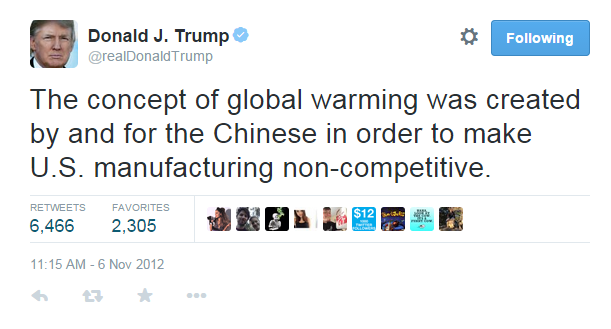
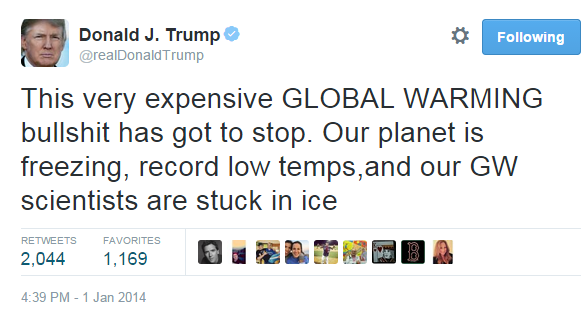
There are many obstacles to reducing our carbon footprints and achieving a lower carbon impact whether these be technological, economic or the more recently played out political scenario (USA withdrawal from Paris Climate Agreement).
The oil, coal gas industry in the USA has great power over government and have managed to veto climate change regulations too. Those countries that have major fossil fuel reserves are also the major obstacles to agreement. For it seems that as long as there is money to be made from these finite energy supplies, agreement on climate change solutions will take a back seat.
Click here for a coal mining story from the USA and an interesting embedded video on Germany's reliance on coal too.
The oil, coal gas industry in the USA has great power over government and have managed to veto climate change regulations too. Those countries that have major fossil fuel reserves are also the major obstacles to agreement. For it seems that as long as there is money to be made from these finite energy supplies, agreement on climate change solutions will take a back seat.
Click here for a coal mining story from the USA and an interesting embedded video on Germany's reliance on coal too.
|
|
|
Task - This piece of work is going to be completed in two parts.
Part 1 - Using this November 2019 edition of BBC The Inquiry, complete this note taking framework on the process of going 'Carbon Zero'. Part 2 - Research and take notes on The Paris Agreement 2015 Use this webpage (or IB DP text) and the videos to the right to complete your research. Please complete a presentation showing the following: Slide 1 - Publicity photo from the event with leaders involved Slide 2 - Objectives Slide 3 - Who signed up? Who didn't? Slide 4 - Successes & Failures (a BIG focus on Trump administration needed here and recent withdrawal in November 2020 followed by Biden presidency re-admission in 2021). |
|
Extend your understanding
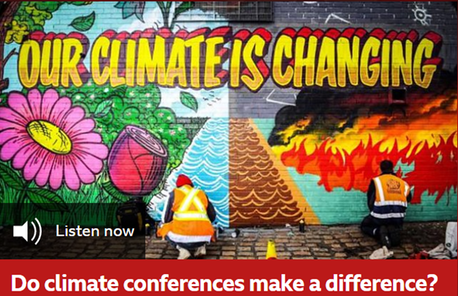
The COP26 Conference took place in Glasgow in November 2021. This excellent BBC Inquiry podcast spends 23 minutes trying to answer the question: Do Climate Conferences Make a Difference?
No note taking required! Click on the image below to access the podcast.
The COP26 Conference took place in Glasgow in November 2021. This excellent BBC Inquiry podcast spends 23 minutes trying to answer the question: Do Climate Conferences Make a Difference?
No note taking required! Click on the image below to access the podcast.
Adaptation & Mitigation Strategies...
|
Mitigation – reducing climate change – involves reducing the flow of heat-trapping greenhouse gases into the atmosphere, either by reducing sources of these gases (for example, the burning of fossil fuels for electricity, heat or transport) or enhancing the “sinks” that accumulate and store these gases (such as the oceans, forests and soil).
Source: NASA |
Adaptation – adapting to life in a changing climate – involves adjusting to actual or expected future climate. The goal is to reduce our vulnerability to the harmful effects of climate change (like sea-level encroachment, more intense extreme weather events or food insecurity). It also encompasses making the most of any potential beneficial opportunities associated with climate change (for example, longer growing seasons or increased yields in some regions).
|
|
|
|
Watch the first video above.
1. Outline how an adaptation approach to climate change works and how it may be attained. What are the limitations of adaptation?
2. Outline how the mitigation approach works and why it needs to be on a large scale.
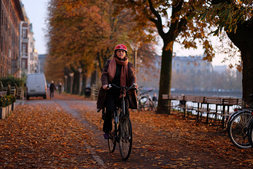
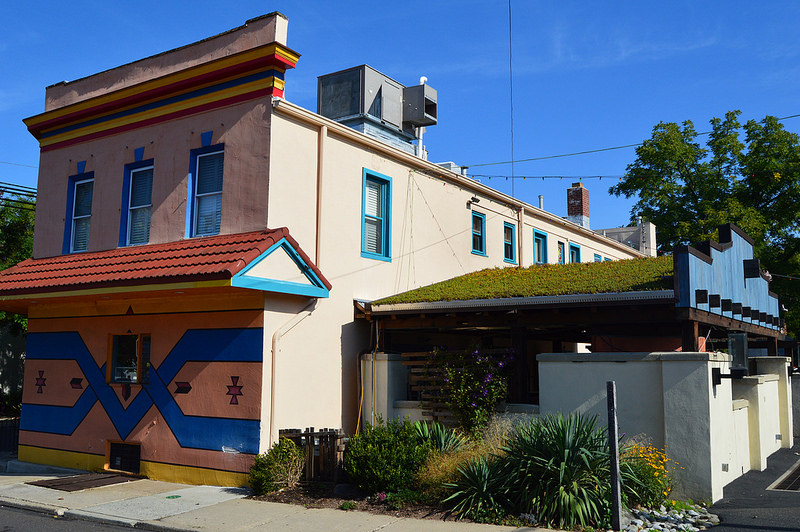
Watch the second video above. This is all about adaptation strategies. If you want further information about some of the strategies show, please click on the photos beneath.
Copenhagen Waterways France Green Roofs Yokohama Stadium Mexico Forestry Scheme
|
|
|
|
Optional Task- Using this link, watch the UN produced video on mitigation and adaptation strategies to climate change and take notes. This can be changed to six different languages.
Task 1 - In a group, you are now going to focus on each of the following mitigation schemes:
1. Carbon Trading - AFP Video
2. Carbon Offsetting - BP video
3. Alternatives to fossil fuels - VOA video
4. Geoengineering - Kurzgesagt video
5. Aforestation - Mr. Beast and Mark Rober & #teamtees (2 videos)
6. Carbon Capture & Sequestration - 2 x Seafields videos
You may use the subject textbook and the videos below as a starting point but you will need to carry out your own research.
Produce a 1 sided fact sheet to share with the class on how the six mitigation schemes work.
Follow the 4P's structure (Power, Place, Possibility, Power) in your work.
Include images and maps to show the schemes in action.
Task 1 - In a group, you are now going to focus on each of the following mitigation schemes:
1. Carbon Trading - AFP Video
2. Carbon Offsetting - BP video
3. Alternatives to fossil fuels - VOA video
4. Geoengineering - Kurzgesagt video
5. Aforestation - Mr. Beast and Mark Rober & #teamtees (2 videos)
6. Carbon Capture & Sequestration - 2 x Seafields videos
You may use the subject textbook and the videos below as a starting point but you will need to carry out your own research.
Produce a 1 sided fact sheet to share with the class on how the six mitigation schemes work.
Follow the 4P's structure (Power, Place, Possibility, Power) in your work.
Include images and maps to show the schemes in action.
Ways climate change and inequality are connected...
You are going to work in pairs to complete the tasks below. Click here to access a Google Shared Document containing the tasks. Make a copy of the Doc and share with one another / work collaboratively to complete the four tasks.
|
Task 1 - Read this article and complete these basic response tasks.
i. Outline the impact of climate change on both the GDP of India and Brazil as outlined by the stated report. ii. Why are south east Asian countries often so badly impacted? iii. What is climate change doing to the frequency and intensity of storms and how does this impact some vulnerable countries? iv. What is the link between climate change and growth in poor urban areas? v. How can climate change impact on disposable income levels and poverty in countries like the USA and Spain? vi. Outline why women are often hit the hardest by climate change. Watch the embedded video on the DW article as well as the video to the right. Task 2 - Listen to short podcast from the BBC (click on the image to the right) that explains the role that changing gender roles can have on the fight against climate change. Make notes on the ways that improving gender equality can improve our chances of tacking climate change. Task 3 - Now read this article and make notes / mind map on the first four points, including clear titles and being careful to highlight key data. Now, study the map to the right. Click to enlarge. (a) Climate change equity for 2010. (b) Climate change equity for 2030.
Countries with emissions in the highest quintile and vulnerability in the lowest quintile are shown in dark red (the climate free riders) Those countries with emissions in the lowest quintile and vulnerability in the highest quintile are shown in dark green (the climate forced riders). Intermediate levels of equity are shown in graduating colours, with countries in yellow producing GHG emissions concomitant with their vulnerability to the resulting climate change. Data deficient countries are shown as grey. Maps generated using ESRI ArcGIS 36. Task 4 - Describe the global distribution of 'climate free & forced riders' in 2010 and how the levels of equity change by 2030 globally. |

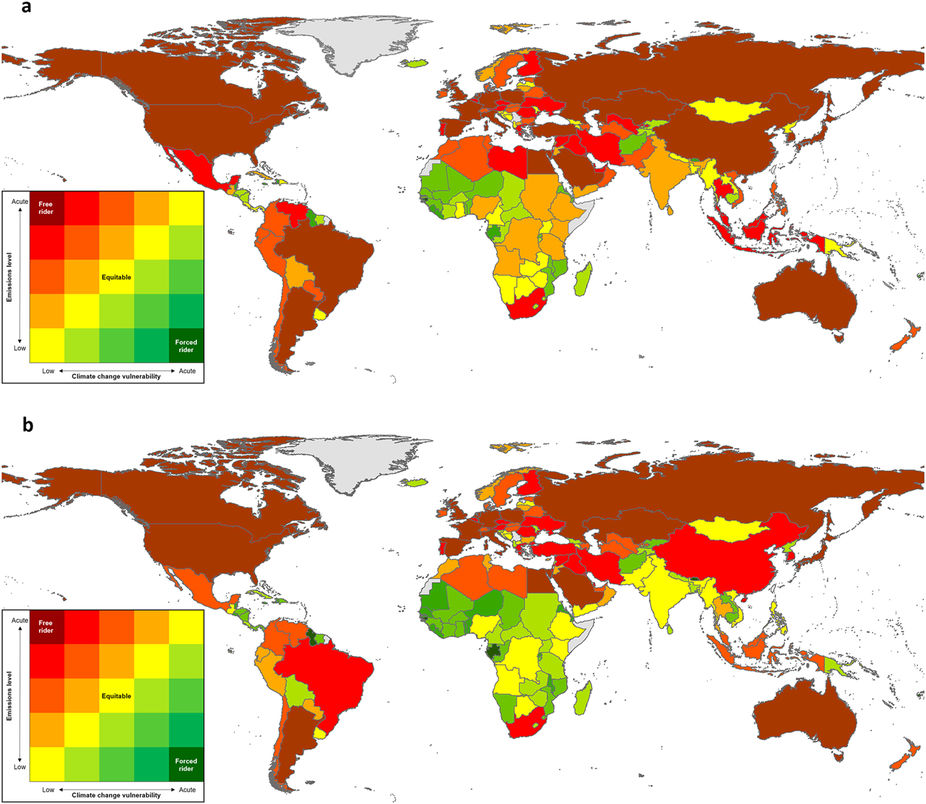
Source: https://www.nature.com/articles/srep20281
|
The response to climate change in one country...
|

|
In this short end of unit piece of work, you will be examining some of the ways in which France is responding to climate change through a series of projects initiated by ordinary French people.
Bound by and fully signed up to the Paris 2015 Agreement, Macron's first idea was to place a 23% tax rise on fuel that he hoped would incentivise people to either turn to hybrid cars or to use more public transport. The rural population revolted over the tax citing the lack of public transport alternatives and the high cost of switching to electric cars (despite a government 'prime').
Then this happened...
Bound by and fully signed up to the Paris 2015 Agreement, Macron's first idea was to place a 23% tax rise on fuel that he hoped would incentivise people to either turn to hybrid cars or to use more public transport. The rural population revolted over the tax citing the lack of public transport alternatives and the high cost of switching to electric cars (despite a government 'prime').
Then this happened...
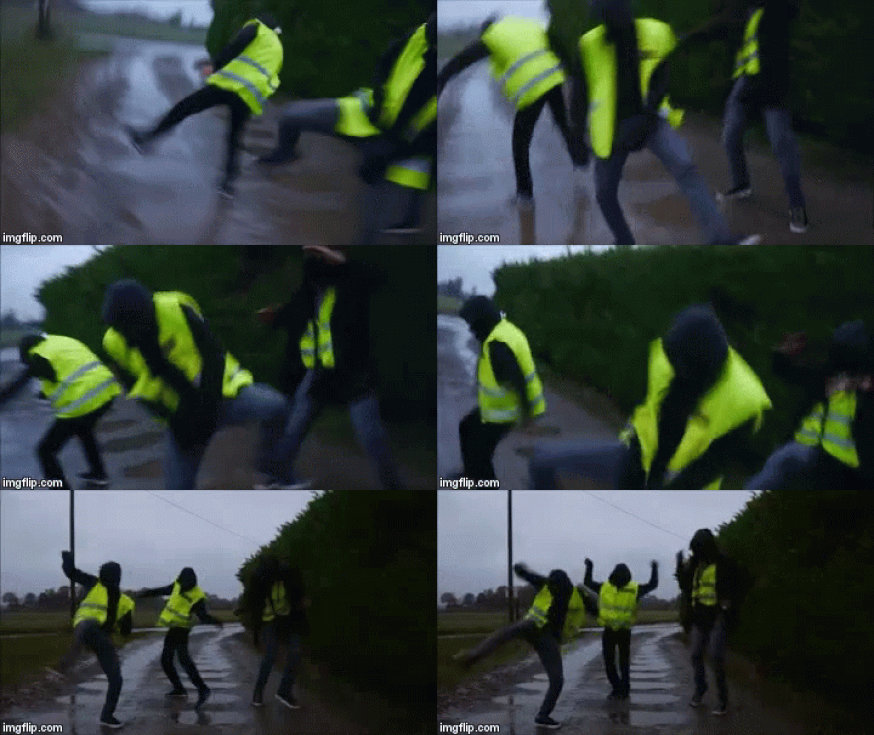
Covid-19 put a stop to the Yellow Vest movement about 18 months after it first started and Macron went back to the drawing board.
Part 1 - Plastic, Waste & Energy
Some immediate and hard hitting proposals were brought in to combat single use plastics.
Task 1 - Read this article and summarise what the first items to be phased out were.
Read a little further down...
Task 2 - Explain the reasoning behind the demand that all public establishments provide water fountains and that why some distributors will have to accept packaging back from their consumers. Additionally, note what France's target is by 2025.
Read a little further down..
Task 3 - Outline what France is doing regarding its energy policy and what will happen to the remaining coal fired power stations.
Keep reading, almost there...
Task 4 - Outline the changes and modifications that are aimed to make homes more energy efficient by the new government scheme.
Part 2 - Ask The People!
Following the plans outlined above, an inclusive and people focused approach was taken where 150 people were chosen from the thousands who applied to take part in 'The Citizens' Convention on Climate'.
This is how it worked:
Part 1 - Plastic, Waste & Energy
Some immediate and hard hitting proposals were brought in to combat single use plastics.
Task 1 - Read this article and summarise what the first items to be phased out were.
Read a little further down...
Task 2 - Explain the reasoning behind the demand that all public establishments provide water fountains and that why some distributors will have to accept packaging back from their consumers. Additionally, note what France's target is by 2025.
Read a little further down..
Task 3 - Outline what France is doing regarding its energy policy and what will happen to the remaining coal fired power stations.
Keep reading, almost there...
Task 4 - Outline the changes and modifications that are aimed to make homes more energy efficient by the new government scheme.
Part 2 - Ask The People!
Following the plans outlined above, an inclusive and people focused approach was taken where 150 people were chosen from the thousands who applied to take part in 'The Citizens' Convention on Climate'.
This is how it worked:
|
|

|
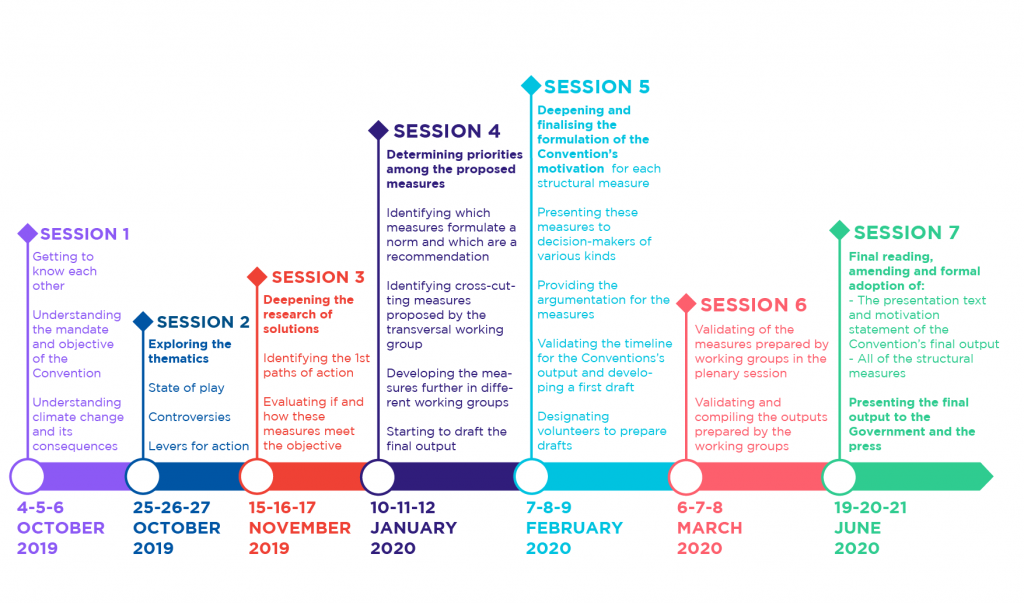
Task 5 - Using the model above and this graphic, summarise in approximately 100 words what the convention aimed to do within the timescale given.
Task 6 - Using this article and this one too, take concise notes on at least three laws that were enacted as a result of the work of the 150 people above. Make sure that you explain how each one links to reducing the impacts of climate change.
Part 3 - Changing the French Constitution
Task 7 - As as result of The Citizens Convention on Climate, one of the outcomes that was put to Macron was to change the French constitution to include reference to climate change and the preservation of the environment. Read this article and make a short summary of the story and its likely future impact on government decision making.